 用户: 182****0010
时间: 2022-01-08 22:18:13 来自: iPad11,6
在“刘炳善《英国文学简史》(第3版)笔记和鑫辉娱乐官方app下载真题详解”的内容第974页备注了学习笔记
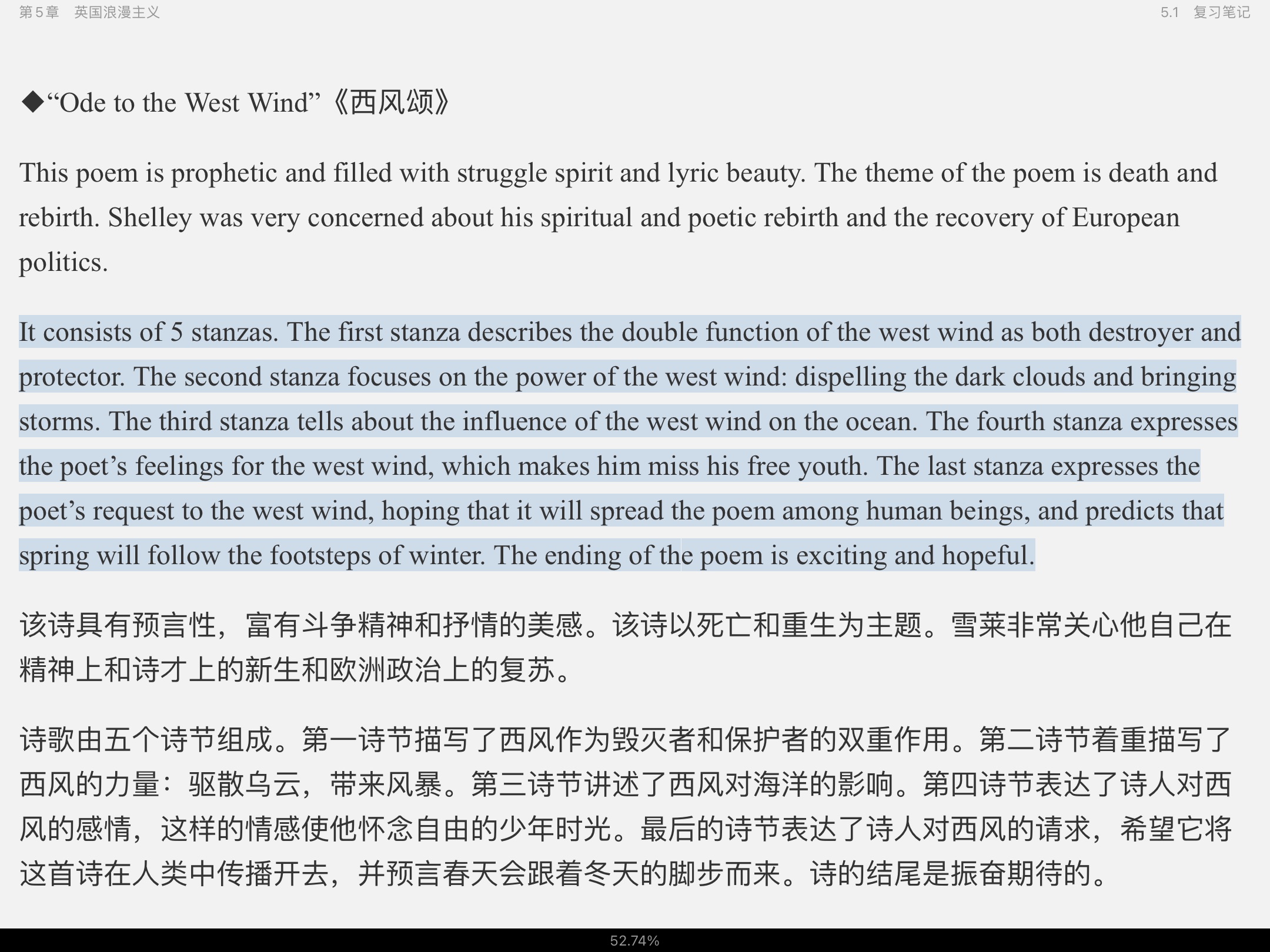
It consists of 5 stanzas. The first stanza describes the double function of the west wind as both destroyer and protector. The second stanza focuses on the power of the west wind: dispelling the dark clouds and bringing storms. The third stanza tells about the influence of the west wind on the ocean. The fourth stanza expresses the poet’s feelings for the west wind, which makes him miss his free youth. The last stanza expresses the poet’s request to the west wind, hoping that it will spread the poem among human beings, and predicts that spring will follow the footsteps of winter. The ending of the poem is exciting and hopeful.
点击查看鑫辉娱乐官方app下载全文:前往在线阅读下载全文
用户182****0010正在学习的鑫辉娱乐官方app下载简介:
刘炳善《英国文学简史》(第3版)笔记和鑫辉娱乐官方app下载真题详解
手机扫码阅读全文
第1章 早期和中世纪的英国文学
1.1 复习笔记
1.2 鑫辉娱乐官方app下载真题与典型题详解
第2章 英国文艺复兴
2.1 复习笔记
2.2 鑫辉娱乐官方app下载真题与典型题详解
第3章 英国资产阶级革命时期
3.1 复习笔记
3.2 鑫辉娱乐官方app下载真题与典型题详解
第4章 十八世纪的英国文学
4.1 复习笔记
4.2 鑫辉娱乐官方app下载真题与典型题详解
第5章 英国浪漫主义
5.1 复习笔记
5.2 鑫辉娱乐官方app下载真题与典型题详解
第6章 英国批判现实主义
6.1 复习笔记
6.2 鑫辉娱乐官方app下载真题与典型题详解
第7章 19世纪中后期的散文家和诗人
7.1 复习笔记
7.2 鑫辉娱乐官方app下载真题与典型题详解
第8章 二十世纪英国文学
8.1 复习笔记
8.2 鑫辉娱乐官方app下载真题与典型题详解
第9章 二战前后的诗人和小说家
9.1 复习笔记
9.2 鑫辉娱乐官方app下载真题与典型题详解
