 用户: 释怀
时间: 2022-03-02 09:52:24 来自: 在线版
在“刘炳善《英国文学简史》(第3版)笔记和鑫辉娱乐官方app下载真题详解”的内容第0页备注了学习笔记
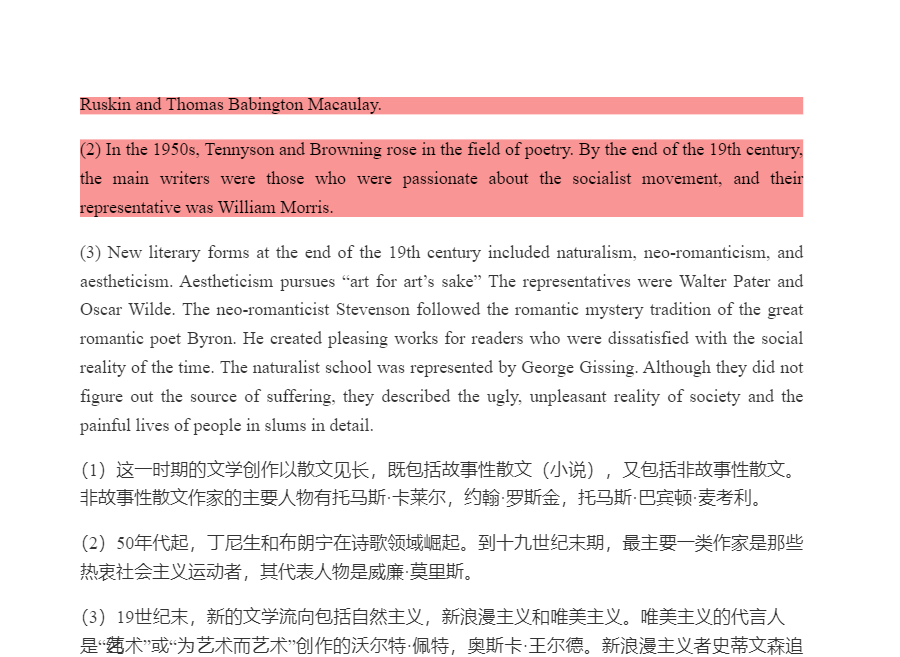
(3) New literary forms at the end of the 19th century included naturalism, neo-romanticism, and aestheticism. Aestheticism pursues “art for art’s sake” The representatives were Walter Pater and Oscar Wilde. The neo-romanticist Stevenson followed the romantic mystery tradition of the great romantic poet Byron. He created pleasing works for readers who were dissatisfied with the social reality of the time. The naturalist school was represented by George Gissing. Although they did not figure out the source of suffering, they described the ugly, unpleasant reality of society and the painful lives of people in slums in detail.
点击查看鑫辉娱乐官方app下载全文:前往在线阅读下载全文
用户释怀正在学习的鑫辉娱乐官方app下载简介:
刘炳善《英国文学简史》(第3版)笔记和鑫辉娱乐官方app下载真题详解
手机扫码阅读全文
第1章 早期和中世纪的英国文学
1.1 复习笔记
1.2 鑫辉娱乐官方app下载真题与典型题详解
第2章 英国文艺复兴
2.1 复习笔记
2.2 鑫辉娱乐官方app下载真题与典型题详解
第3章 英国资产阶级革命时期
3.1 复习笔记
3.2 鑫辉娱乐官方app下载真题与典型题详解
第4章 十八世纪的英国文学
4.1 复习笔记
4.2 鑫辉娱乐官方app下载真题与典型题详解
第5章 英国浪漫主义
5.1 复习笔记
5.2 鑫辉娱乐官方app下载真题与典型题详解
第6章 英国批判现实主义
6.1 复习笔记
6.2 鑫辉娱乐官方app下载真题与典型题详解
第7章 19世纪中后期的散文家和诗人
7.1 复习笔记
7.2 鑫辉娱乐官方app下载真题与典型题详解
第8章 二十世纪英国文学
8.1 复习笔记
8.2 鑫辉娱乐官方app下载真题与典型题详解
第9章 二战前后的诗人和小说家
9.1 复习笔记
9.2 鑫辉娱乐官方app下载真题与典型题详解
